
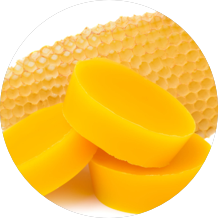
When a formulator sets out to create a rich, butter-texture cream, the instinct is to reach for something with “butter” in the name. Shea butter. Cocoa butter. The logic seems sound, if you want a buttery emulsion, start with a butter. But what if the ingredient that delivers that luxurious, thick, indulgent texture is a wax?
Enter Bayberry Wax (Myrica Cerifera fruit wax) and the data that might just make you rethink your oil phase strategy.
Not All Solids Are Equal
Adding solids to the oil phase is a well-established route to building viscosity and structure in an O/W emulsion. To put three common options head-to-head, we ran the same natural cream formula three times, swapping only the oil-phase solid at 7.5%: Bayberry Wax, Cocoa Butter, and Shea Butter.
Shea Butter delivered the least viscosity build of the three. Despite its reputation for richness, it contributes modest structural reinforcement at this level. Cocoa Butter performed slightly better, but not by a meaningful margin. Bayberry Wax was in a different category entirely. At the same 7.5%, it effectively doubled the viscosity of the finished emulsion, producing a noticeably richer, more structured cream with true butter-like body.

What’s the Difference?
It comes down to chemical structure. Bayberry Wax’s tighter crystalline wax ester architecture forms a more robust network within the oil phase, translating directly to higher emulsion viscosity. Butters, by contrast, tend toward more amorphous polymorphic structures and are softer and less reinforcing at equivalent concentrations.
Stability Is Where Bayberry Wax Really Pulls Ahead
Shea and cocoa butter both contain unsaturated fatty acids susceptible to oxidative rancidity. Bayberry Wax, composed primarily of wax esters rather than triglycerides, is inherently more oxidation-resistant. Beyond oxidation, it is the stereochemistry of butter triglycerides that creates longer-term stability challenges. Their tendency to migrate and recrystallize within the emulsion matrix can lead to “seeding,” where polymorphic transitions over time produce a textured, bumpy feel in the finished product. Bayberry Wax’s wax ester chemistry resists this migration, maintaining a smooth, consistent texture across shelf life.
Natural Cream with Bayberry Wax
Formula #: 6/25-188/587/358-1/2/3
This all-natural and vegan formula offers an extra-moisturizing treatment that soothes and restores over-stressed skin. Bayberry wax helps provide an incredibly rich & luxurious after-feel.
| Ingredient Trade Name | INCI Name | % |
| Phase A | ||
| Deionized Water | Aqua | 66.5 |
| Bentonite Albagel BC | Bentonite | 2.0 |
| Glycerin | Glycerin | 3.0 |
| Keltrol CG-SFT | Xanthan Gum | 0.5 |
| Optiphen | Phenoxyethanol | 1.0 |
| Phase B | ||
| Kostol Natural E | Behenyl Alcohol, Polyglyceryl-3 Stearate | 4.0 |
| Bayberry Wax | Myrica Cerifera (Bayberry) Wax | 7.5 |
| NaturalAtum | Canola Oil, Ricinus Communis (Castor) Seed Oil, Polyhydroxystearic Acid, Euphorbia Cerifera (Candelilla) Wax, Helianthus Annuus (Sunflower) Seed Wax, Tocopheryl Acetate | 7.5 |
| Kester Wax K-24 | Lauryl Laurate | 5.0 |
| Cetiol CC | Dicaprylyl Carbonate | 3.0 |
So, Should We Rename It Bayberry Butter?
It’s a fair question. When an ingredient outperforms the butters on viscosity, beats them on oxidative and migration stability, and delivers a smooth, elegant skin feel without heavy drag, the “wax” label might be underselling it. It is also fully natural, vegan, and ethically sourced from Colombian farming communities under sustainable harvesting practices aligned with Nagoya Protocol principles.
The next time a formula brief calls for a buttery-texture cream, before you reach for shea or cocoa, consider what is actually doing the structural work. Bayberry Wax can build twice the thickness with better long-term stability. Maybe it is time to call it Bayberry Butter after all. Want to discuss incorporating Bayberry Wax into your formulation? Contact Koster Keunen today. Our wax chemists would be only too pleased to talk over your formulation plans and options.


About Koster Keunen
Koster Keunen has been working with wax since 1852 and has used our extensive experience and knowledge base to continuously develop new chemistries. Whether you are developing a new product, or need help with a reformulation or replacement, contact us to learn more about how we source, refine or develop waxes so you can create the perfect formula.